How to Connect Legacy Modbus Meters to a Cloud Energy Dashboard
Can you stream real-time data from an older, on-site Modbus RTU energy meter into a modern cloud system without replacing the hardware?

Can you stream real-time data from an older, on-site Modbus RTU energy meter into a modern cloud system without replacing the hardware?
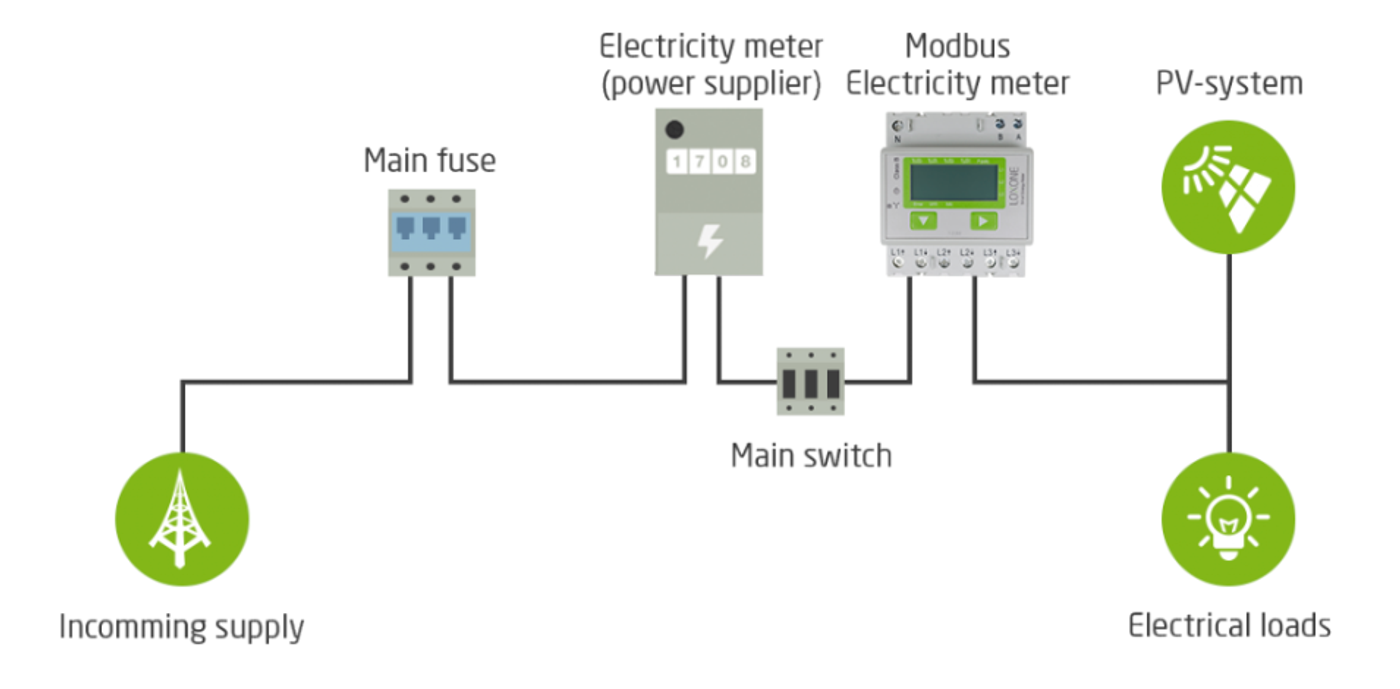
Can you stream real-time data from an older, on-site Modbus RTU energy meter into a modern cloud system without replacing the hardware?
Yes. Legacy Modbus RTU meters can be integrated into cloud-based energy networks without hardware replacement by deploying an edge data logger gateway. This gateway acts as a protocol translator, collecting physical serial data over an RS-485 connection and transforming it into encrypted MQTT or REST API JSON payloads compatible with cloud dashboards.
By avoiding a costly "rip-and-replace" overhaul of your physical metering infrastructure, your business can unlock portfolio-wide visibility, real-time threshold alerting, and compliance-ready carbon accounting while preserving your existing hardware investments.
Modbus is one of the oldest and most reliable industrial electronic communication protocols, originally developed in 1979. Millions of commercial buildings and industrial facilities still rely on Modbus RTU (Remote Terminal Unit) to transmit energy data over physical serial lines (RS-485 cables).
While incredibly durable, traditional Modbus RTU has two major limitations in the cloud era:
To bridge this gap, enterprises must introduce a software-defined or hardware-defined integration layer that extracts, normalizes, and transmits this isolated field data to the cloud.
To establish a clean, automated data stream from a physical facility to a cloud-based energy analytics dashboard, engineer teams use a standardized four-tier technical architecture.
[Physical Modbus RTU Meters]
│ (via RS-485 Serial Cable)
▼
[Edge Gateway / Protocol Converter]
│ (Translates Binary to MQTT/JSON)
▼
[Secure WAN / Internet Connection]
│ (TLS-Encrypted Uplink)
▼
[Ecolyptus Cloud Energy Platform]
Your existing hardware footprint—such as an Accuenergy AcuRev 2100 submeter, an eGauge unit, or a Schneider Electric power monitor—tracks the electrical current locally. These devices are daisy-chained together using twisted-pair RS-485 serial cables.
The serial chain plugs directly into an on-site Edge Gateway (such as the Ecolyptus LyptusGate or a Wattsense hub). The gateway is programmed with a "Modbus Register Map" matching your specific meter model. This map tells the gateway exactly which binary registers represent key data metrics like:
Once the edge gateway reads the raw numbers, it converts them into a clean format (typically JSON) and assigns a precise UTC timestamp. It then safely pushes this data over the building's local internet connection using an encrypted MQTT uplink or a REST API POST request secured by TLS encryption.
The incoming data hits the Ecolyptus Data Compatibility Engine. The cloud platform processes the stream, instantly normalises variations across global time zones, and transforms the raw electrical pulses into actionable, compliance-ready carbon tracking visualisations.
What happens to my energy data if the building's local internet connection goes down?
Modern edge gateways mitigate local internet outages by incorporating an on-board hardware backup system. For example, devices like the LyptusGate feature local microSD storage that cache time-stamped variable data during an offline event. Once internet connectivity is restored, the gateway automatically executes a bulk synchronization payload to prevent any data gaps or loss of historical billing telemetry.
Unlike Modbus RTU, which relies on physical serial cables, Modbus TCP operates natively over standard local Ethernet networks (TCP/IP). However, it still transmits data in raw industrial registers and lacks built-in security encryption. A software integration layer or a lightweight local gateway is still highly recommended to wrap the Modbus TCP stream in an encrypted TLS layer before pushing it over the public internet to a cloud platform.
Cloud platforms like Ecolyptus instantly convert raw consumption data ($kWh$) into carbon emissions equivalents ($kgCO_2e$) by automatically cross-referencing your real-time usage data against hyper-localized, government-approved carbon intensity metrics. In Ireland and the UK, the software maps consumption directly against regularly updated SEAI and DEFRA carbon factors to output fully compliant Scope 1 and Scope 2 environmental reporting.