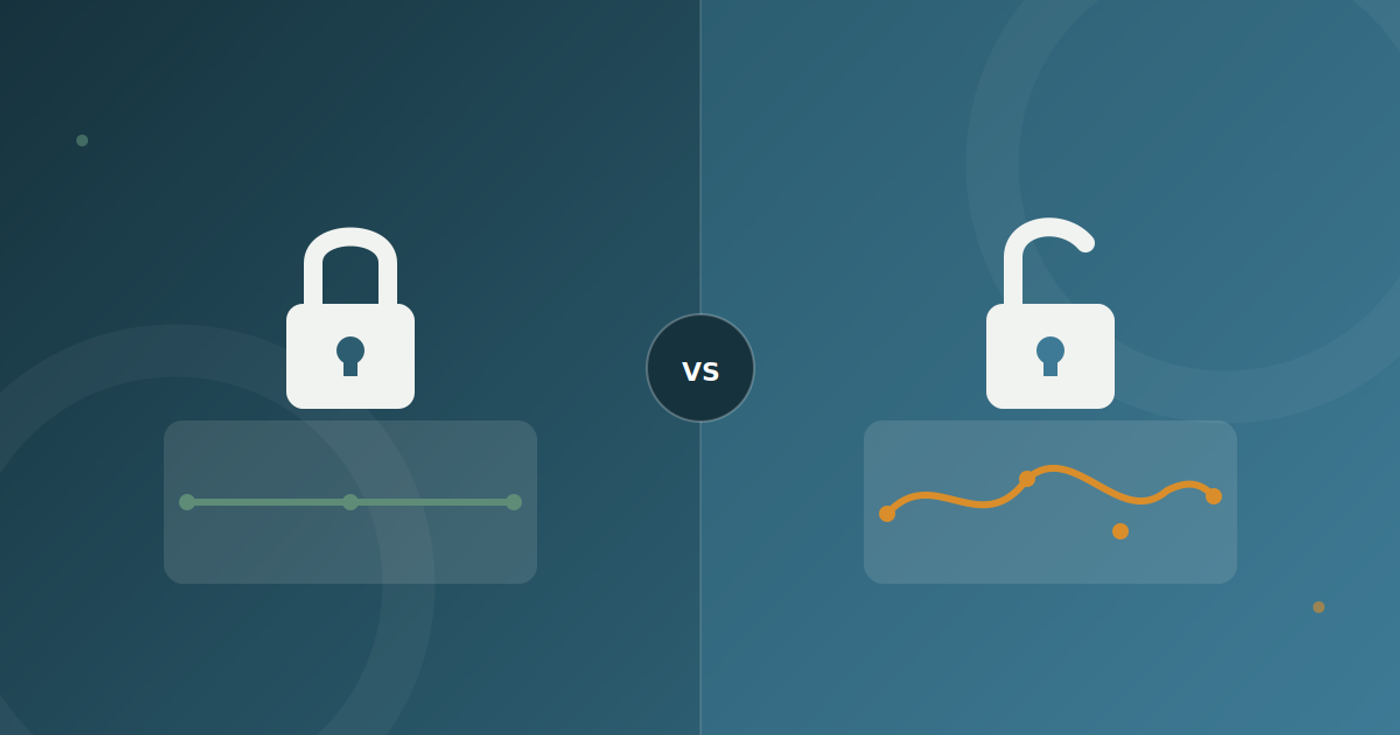
Fixed vs. Variable Energy Tariffs: Which Is Right for Your Business?
Your energy contract is coming up for renewal, and the supplier is presenting you with two options. One locks in a rate for the next year or two. The other moves with the market. Someone on the sales call is going to tell you the fixed rate is "safer." Someone else, at a different supplier, will tell you variable is where the real savings are.
Both of them are right, sometimes. Neither of them is right for every business. Here's what actually separates the two, and how to figure out which one fits you specifically.
What a Fixed Tariff Actually Is
A fixed tariff locks in a set rate per unit of energy for the length of your contract, typically one to three years. Whatever happens to wholesale energy prices during that period, your rate doesn't move.
The appeal is obvious: certainty. You know exactly what your energy cost will look like for budgeting purposes, no surprises, no exposure to a sudden market spike. This matters more than people sometimes give it credit for. If you're trying to forecast costs a year out, a fixed rate removes an entire variable from that calculation.
The tradeoff is that you're also locked out of any benefit if prices fall. If the market drops significantly six months into a two-year fixed contract, you're still paying the rate you agreed to when you signed.
What a Variable Tariff Actually Is
A variable tariff moves with the wholesale market, sometimes reviewed monthly, sometimes tracking an index more directly. When wholesale prices go down, your rate can go down with them. When they go up, so does your bill.
This isn't automatically riskier in a bad way. Energy markets do move in both directions, and businesses on variable tariffs have genuinely benefited from price drops that fixed-rate customers didn't get to participate in. But it also means your energy line item in the budget is an estimate, not a fixed number, and it can move meaningfully month to month.
The Real Question Isn't "Which Is Cheaper"
Here's the thing most comparisons get wrong: they try to answer "which one saves more money" as if that's knowable in advance. It isn't. Nobody can reliably predict where wholesale energy prices are headed over the next two years, and any supplier who implies otherwise is selling confidence they don't actually have.
The better question is: how much does price uncertainty actually cost you, in terms of stress, planning difficulty, or real financial risk, if it goes the wrong way?
For some businesses, the answer is "not much." A larger, more financially resilient business with healthy margins might genuinely be fine absorbing a bad six months on a variable tariff, and over a longer horizon, variable rates have sometimes worked out cheaper on average.
For other businesses, particularly smaller ones running on tighter margins, a bad quarter of unexpectedly high energy costs isn't just uncomfortable, it's the difference between a manageable year and a genuinely difficult one. For that kind of business, paying a small premium for certainty is a completely rational trade, even if it means technically "overpaying" compared to what a variable rate might have delivered.
When Fixed Genuinely Makes Sense
- You're budgeting tightly and can't absorb a cost spike without real consequences
- You want one less variable to think about, full stop
- You're locking in during a period when prices are relatively low or stable, not spiking
When Variable Genuinely Makes Sense
- Your business has enough financial buffer to ride out a bad stretch without real damage
- You believe (with a reasonable basis, not just optimism) that prices are more likely to fall than rise over your contract horizon
- You're comfortable reviewing your energy costs regularly rather than setting and forgetting
The Mistake Worth Actually Avoiding
The most common bad decision isn't picking fixed or variable, it's picking fixed out of fear, at the wrong moment. A lot of businesses lock into a long fixed contract right after a scary price spike, precisely when prices are elevated, essentially locking in the bad rate for the next two years just to make the anxiety stop.
If you're going to go fixed, the ideal time to do it is when prices are calm or trending down, not immediately after a shock. If you're renewing during a spike and feeling pressured to lock something in immediately, that's worth pausing on rather than rushing.
The Factor That Actually Matters More Than People Think
Here's something that gets skipped in most fixed-versus-variable conversations entirely: your actual usage pattern matters as much as which tariff type you pick.
If your business runs heavy during specific hours, and your tariff (fixed or variable) doesn't reflect that, you could be leaving savings on the table regardless of which type you chose. A time-of-use structure charges differently depending on when you consume, and if you don't actually know your load profile, you can't tell whether that structure would help or hurt you. This is a separate decision from fixed versus variable, but it often gets bundled into the same conversation and quietly ignored.
How to Actually Decide
- Be honest about your risk tolerance, not your optimism. Would a genuinely bad quarter of energy costs actually hurt your business, or just annoy you? Those call for different answers.
- Check the timing, not just the rate. A fixed offer during a price spike and the same offer during a calm period are two very different decisions, even if the number on paper looks similar.
- Look at your actual consumption pattern before assuming either tariff type is right. If you don't know when you use energy, that's worth figuring out first, it affects this decision more than most people assume.
- Don't treat this as a one-time decision you never revisit. Contracts end. Markets change. What made sense two years ago might not make sense at the next renewal.
There's no universally correct answer here, and anyone claiming there is one hasn't actually looked at your specific situation. The right choice depends on your risk tolerance, your timing, and how well you actually understand your own usage pattern, not on which supplier gave the more confident pitch.