EU Taxonomy Regulation: What It Means for Mid-Market Companies
A breakdown of the EU Taxonomy Regulation: what counts as "sustainable," who needs to comply, and why mid-market companies can no longer assume this is a large-corporate problem.

A breakdown of the EU Taxonomy Regulation: what counts as "sustainable," who needs to comply, and why mid-market companies can no longer assume this is a large-corporate problem.
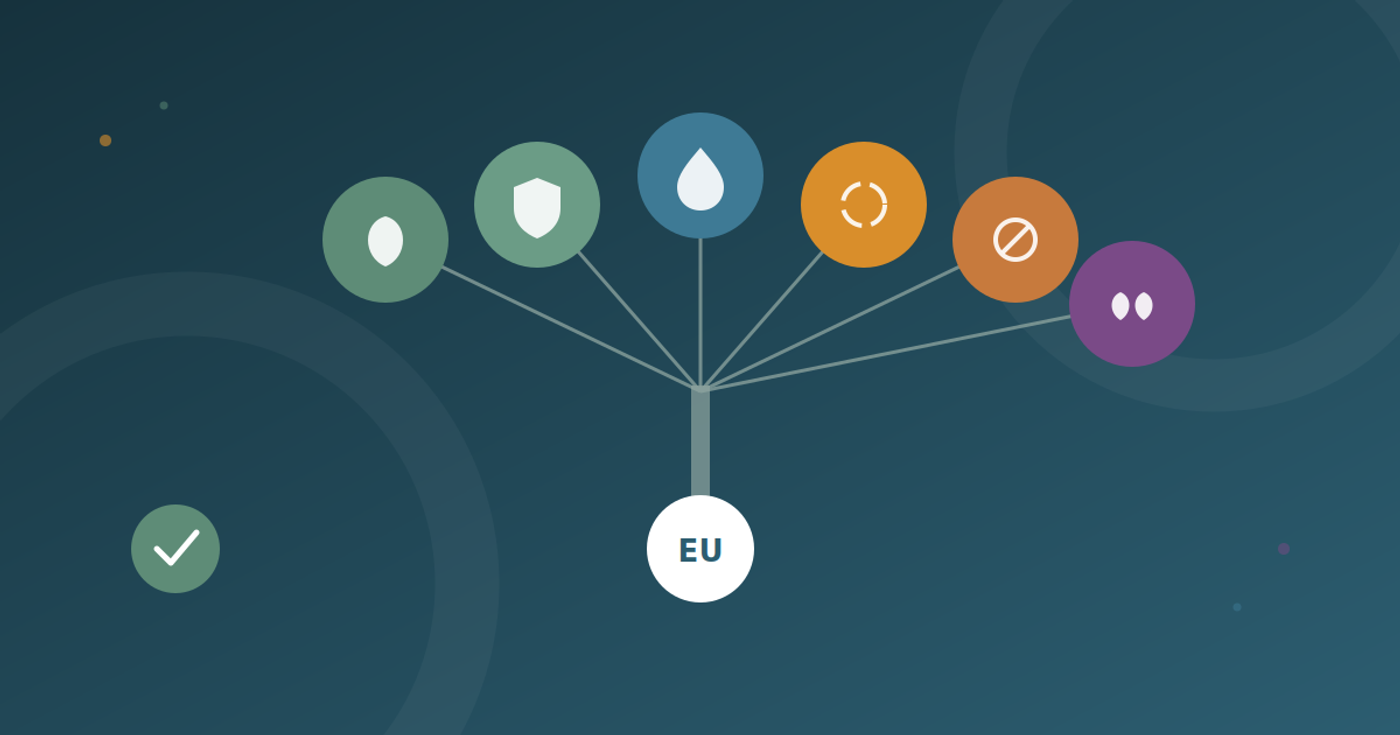
Quick gut check: if someone asked you right now whether your business activities count as "environmentally sustainable" under EU law, could you answer with anything more specific than "probably, I think"? If not, you're not alone, and you're exactly who this regulation is starting to catch up with.
The EU Taxonomy Regulation has spent the last few years being treated as a large-corporate, financial-sector problem. That window is closing. Here's what it actually is, and why "we're too small for this" is a riskier assumption than it used to be.
The EU Taxonomy is a classification system, literally a rulebook that defines which economic activities count as "environmentally sustainable" under EU law. Not "green-ish" or "trying its best." A specific, technical, measurable bar.
Think of it as the EU deciding it was tired of every company calling itself sustainable using whatever definition suited its marketing, and building an actual dictionary instead. If your activity meets the criteria, it's "Taxonomy-aligned." If it doesn't, it isn't, regardless of what your sustainability page says.
This matters because Taxonomy alignment is increasingly the reference point investors, lenders, and large customers use to sanity-check sustainability claims. A vague ESG pledge is easy to write. A Taxonomy-aligned percentage of revenue is not something you can fake your way into.
To count as sustainable under the Taxonomy, an activity has to contribute substantially to at least one of six environmental objectives:
Most companies currently assessed under the Taxonomy are evaluated against the first two objectives, since the detailed technical criteria for the others have rolled out more gradually. But the direction is clear: this is expanding, not narrowing.
Here's where the Taxonomy gets genuinely strict, and where a lot of well-intentioned sustainability claims fall apart on inspection.
It's not enough to contribute positively to one objective. You also have to prove Do No Significant Harm (DNSH) to the other five. A renewable energy project that contributes brilliantly to climate mitigation but quietly wrecks local water systems doesn't qualify. The Taxonomy is explicitly designed to prevent "sustainability theater," where one good headline number hides damage happening somewhere else in the value chain.
On top of DNSH, there's also a minimum safeguards test: basic checks on human rights, labour standards, and anti-corruption practices. An activity that's environmentally fine but built on exploitative labour practices doesn't qualify either.
Two terms get used loosely, but they mean genuinely different things:
A lot of loose sustainability messaging blurs this distinction on purpose, because "eligible" sounds almost as good as "aligned" without requiring nearly as much proof. If you're reporting or being asked about Taxonomy figures, this is the first thing worth getting precise about.
If you've been working through CSRD and ESRS requirements, the Taxonomy isn't a separate parallel headache. It's a specific disclosure requirement sitting inside that same broader framework, under Article 8. Companies in scope for CSRD generally also need to disclose the proportion of their turnover, capital expenditure, and operating expenditure that's Taxonomy-eligible and Taxonomy-aligned.
In practice, this means the same underlying data infrastructure you're building for CSRD (granular energy use, emissions by scope, activity-level detail) is exactly what a credible Taxonomy assessment depends on. This isn't extra work bolted onto CSRD; it's the same foundation, asked a slightly different question.
The Taxonomy was originally aimed squarely at large listed companies and financial institutions. Two things have changed that assumption:
First, scope is widening. As CSRD phases in more mid-market companies, Taxonomy disclosure requirements ride along with it. "We're not big enough" is a shrinking category, not a permanent exemption.
Second, and less talked about: the pressure often arrives before the legal requirement does. Mid-market suppliers to large, Taxonomy-reporting companies are increasingly asked directly (in procurement questionnaires, in financing applications, in due diligence for a potential acquisition) whether their activities are Taxonomy-aligned. You can be technically out of scope for mandatory reporting and still be functionally required to answer the question, because someone upstream needs your number to complete their own disclosure.
That second point is the one that catches people off guard. Nobody warns you that the customer renewing your contract might suddenly want a Taxonomy alignment percentage as part of the paperwork.
If this is new territory, the realistic starting point looks like this:
The EU Taxonomy isn't designed to be effortless. It's designed to make "sustainable" mean something specific and checkable. But for mid-market companies, getting ahead of it now, before a customer or lender asks the question first, is a considerably better position than scrambling to answer it under deadline pressure.