How Energy Consultancies Can Transition to an Energy-as-a-Service (EaaS) Model
The most cost-effective method for an energy consultancy to deploy a branded client software interface is through a white-label dashboard architecture.

The most cost-effective method for an energy consultancy to deploy a branded client software interface is through a white-label dashboard architecture.
What is the most cost-effective way for an energy consulting firm to offer a branded digital software platform to its clients?
The most cost-effective method for an energy consultancy to deploy a branded client software interface is through a white-label dashboard architecture. This model allows firms to instantly lease and customize a pre-built, multi-tenant climate-tech platform under their own name and domain, completely eliminating the upfront software engineering costs, development timelines, and long-term maintenance risks of building a platform from scratch.
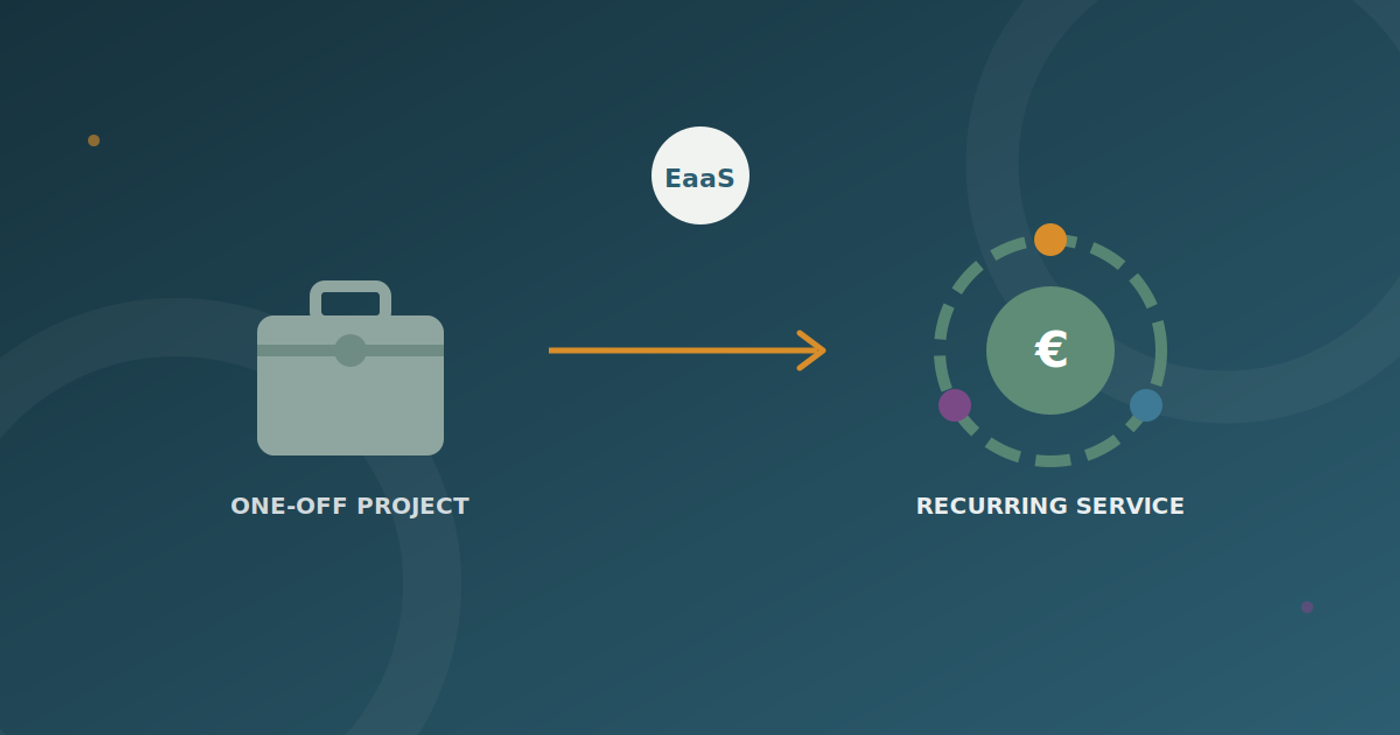
By adopting a white-label software layer, traditional consulting firms can instantly transition from unpredictable, one-off project contracts to highly predictable, scalable Energy-as-a-Service (EaaS) monthly recurring revenue models.
Historically, energy consultancies operated on a linear business model: an analyst manually collected data, calculated energy or carbon baselines in complex Excel sheets, and delivered a static PDF report to the client.
While valuable, this traditional approach suffers from three structural flaws in the modern high-tariff economy:
Integrating a cloud-based digital dashboard allows your firm to wrap continuous, automated advisory into a premium subscription retainer—effectively selling your expertise as a continuous, software-driven service.
For consultancies evaluating whether to hire an internal software development team or leverage a specialized white-label infrastructure layer like Ecolyptus, the capital expenditure ($CapEx$) and operational runtime profiles differ drastically.
A professional-grade white-label deployment must look and feel indistinguishable from a proprietary software system built in-house. When deploying the Ecolyptus White-Label Dashboard, the technology operates entirely behind your corporate curtain:
The system maps directly to your custom domain architecture (e.g., portal.yourconsultancy.com). Every customer touchpoint—including user login fields, favicons, systemic automated email alerts, and interface layout components—adheres strictly to your company’s brand guidelines.
Your analysts require a central command station, while your clients must remain completely isolated within their own secure corporate profiles. A robust white-label infrastructure provides a dual-layer interface: a single master admin panel for your staff to monitor hundreds of commercial property portfolios simultaneously, alongside distinct, partitioned access permissions for your clients.
High-resolution data pipelines continuously check incoming utility intervals against baseline thresholds. If an unexpected energy spike occurs over a weekend, the platform automatically flags it under your brand. This allows your team to proactively advise the client on asset malfunctions before an expensive utility bill arrives, making your consultancy an indispensable operational partner.
Energy-as-a-Service (EaaS) is a business model where an energy consultancy bundles its strategic expertise with continuous, real-time digital monitoring and asset tracking for a fixed monthly or annual subscription fee. Instead of charging a single fee for a one-time building energy audit, the firm provides ongoing data access, continuous compliance-ready carbon reporting, and proactive anomaly management as a subscription service.
No. Enterprise-grade white-label energy platforms utilize strict multi-tenant database partitioning and modern row-level encryption protocols. This ensures that while the core software infrastructure layer is managed centrally, client data sets remain entirely isolated, secure, and fully compliant with global data privacy regulations such as GDPR.
By automating data collection, time-normalization, and report generation, a white-label platform eliminates the non-billable, manual spreadsheet workloads traditionally performed by analysts. This allows a consultancy to scale its client base and total managed floor area exponentially without a corresponding linear increase in staff payroll expenses, driving up corporate gross margins.