The Cost of Blindness: Why Energy Analytics is No Longer Optional in a High-Price World
For decades, commercial energy bills were treated by finance departments as a static, unavoidable cost of doing business. You turned on the lights, you ran the production lines, the bill arrived at the end of the month, and you paid it.
But that era of predictable, low-impact overhead is officially dead.
Geopolitical instability, infrastructure strain, carbon compliance taxes, and unprecedented market volatility have transformed energy from a background operational expense into a volatile line item capable of eroding an entire quarter’s profitability overnight.
When utility prices skyrocket, cutting your energy expenses by just 10% or 15% is no longer a minor sustainability goal—it is a critical strategy for protecting your core business margins.
Yet, most enterprises are still managing this volatile risk entirely in the dark. If your only tool for tracking energy consumption is a retrospective utility bill arriving 30 days after the energy was spent, you aren't managing your costs—you're just conducting an autopsy.
Here is why deploying a real-time energy analytics platform is the single most defensive move your business can make in today's high-price economy.
1. You Cannot Manage What You Do Not Measure
Imagine trying to run your corporate financial strategy by looking at your bank statements only once a quarter, with zero itemized transactions. You would never dream of it. Yet, this is exactly how most companies manage thousands of kilowatt-hours of power.
An energy analytics platform replaces guesswork with high-resolution, itemized data. By capturing interval meter telemetry, the software shows you exactly where, when, and how your capital is being expended.
- The Baseload Problem: You might discover that your commercial buildings are consuming 40% of their peak power at 2:00 AM on a Sunday when the facilities are completely empty.
- The Ghost Load Trap: Legacy HVAC units, unoptimized server racks, or malfunctioning compressed air systems can quietly draw massive currents while operational teams assume they are switched off.
Analytics instantly exposes these inefficiencies, allowing operations teams to implement immediate zero-capital behavioral fixes (like adjusting BMS schedule timers) that yield instant financial returns.
2. Shifting from Autopsies to Proactive Anomaly Detection
Waiting for an inflated utility bill to tell you a major walk-in chiller or commercial manufacturing asset has a faulty compressor is an incredibly expensive mistake. In a high-tariff environment, a machine cycling inefficiently for three weeks can result in thousands of dollars in unnecessary charges.
Modern energy analytics software utilizes intelligent algorithmic threshold tracking to monitor consumption baselines continuously.
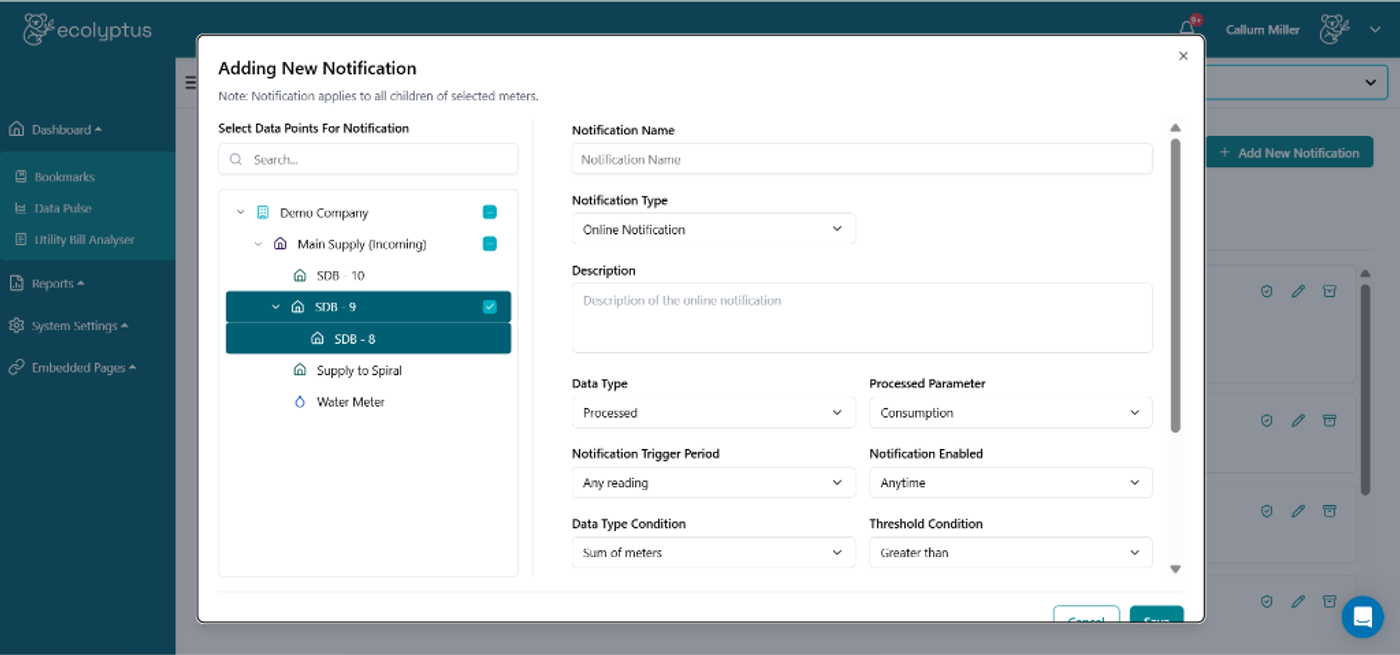
If a piece of equipment experiences a sudden consumption spike, or if a building forgets to enter "eco-mode" over a holiday weekend, the system triggers automated text or email alerts. Your facilities team can intervene within hours, preventing a minor operational anomaly from morphing into a catastrophic end-of-month financial surprise.
3. Conquering Peak Demand and Time-of-Use Tariffs
Energy isn't just getting more expensive; it is getting more complex. Utility providers globally are moving rapidly toward aggressive Time-of-Use (ToU) pricing and punitive Peak Demand Penalties.
Under these structures, consuming energy during a localized grid bottleneck (such as 4:00 PM to 7:00 PM on a weekday) can cost up to five times more than running the exact same equipment at midnight. Furthermore, hitting a single massive "peak" of consumption for just fifteen minutes can trigger a permanent capacity charge that inflates your electrical bill for the entire year.
An energy analytics platform gives you the visibility needed to orchestrate load shifting. By visualizing your real-time demand curves, you can intentionally reschedule high-energy processes (like heavy machinery cycles, EV fleet charging, or deep-cooling phases) into cheaper, off-peak windows—drastically driving down costs without reducing your actual operational output.
4. Defending Against Utility Billing Errors
With utility data systems working overtime to handle complex, fluctuating tariffs, human and software errors on commercial utility bills are becoming shockingly frequent. Without an internal system of record, you have no choice but to blindly trust the invoice sent by your provider.
By maintaining a continuous, independent cloud-based log of your physical meter pulses, an analytics platform acts as your ultimate financial shield.
The software automatically cross-references your real-world consumption logs against your contracted utility tariffs. If your supplier applies the wrong peak rate, miscalculates a standing charge, or issues an over-inflated "estimated" bill, your accounting team has the empirical, auditable data required to dispute the invoice and claw back your capital immediately.
Turn Volatility Into a Competitive Advantage
In a market where energy prices are rising for everyone, efficiency becomes a powerful competitive weapon. The businesses that continue to manage their energy blindly will see their operational margins squeezed dry. The businesses that treat energy as a controllable, optimizing variable will protect their profits, streamline their operations, and build long-term structural resilience.
Don't let rising utility tariffs dictate your profitability. Learn more about our energy analytics platform or book a personalized portfolio assessment with our energy engineering team today.